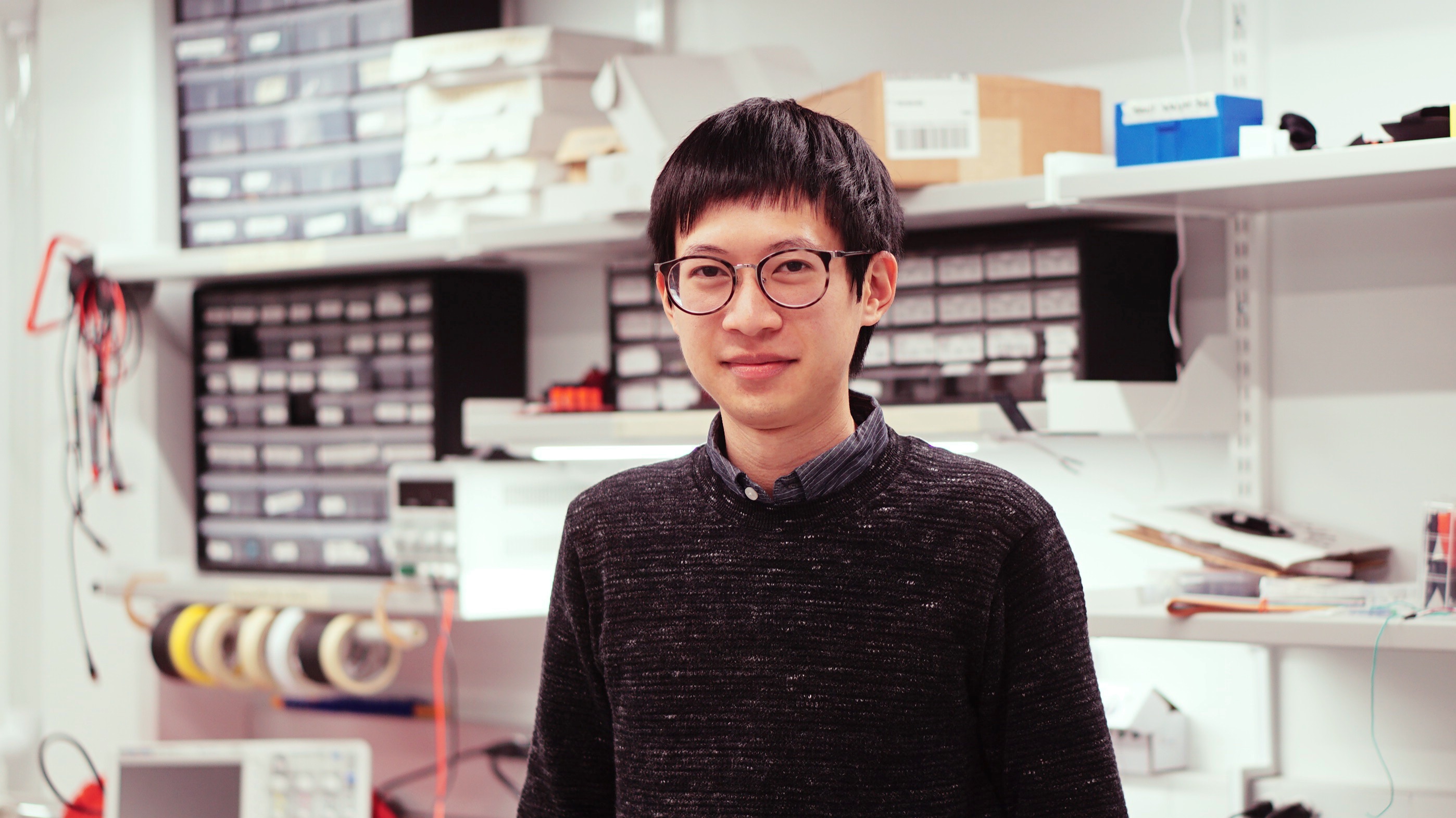
Shan-Yuan Teng
鄧善元
[ CV ]
Shan-Yuan Teng is an Assistant Professor and Yushan Young Fellow in the Department of Computer Science & Information Engineering (CSIE) at National Taiwan University (NTU) in Taipei, Taiwan, where he leads the Dexterous Interaction Lab.
Shan-Yuan’s research advances a new generation of multimodal user interfaces, with a focus on haptic devices that create programmable sensations of touch and force. These devices aim to enhance users’ dexterity across interaction paradigms such as virtual and augmented reality (VR/AR/XR), wearables, and assistive technologies. Their work has been published at premier Human-Computer Interaction (HCI) venues, including ACM CHI and UIST, and demonstrated at SIGGRAPH and IEEE Haptics.
Shan-Yuan received their PhD in Computer Science from the University of Chicago, advised by Prof. Pedro Lopes. Shan-Yuan also holds an M.S. in Computer Science and a B.S. in Electrical Engineering from National Taiwan University.
[ tengshanyuan@csie.ntu.edu.tw ] [ CV ] [ Google Scholar ] [ ORCID ] [ dblp ]
* Shan-Yuan is my first name
Highlights
- Shan-Yuan is leading a workshop at UIST 2026 in Detroit: Workshop on Augmenting Human Dexterity Join us!
- Two UIST 2026 Demos from the lab got accepted:
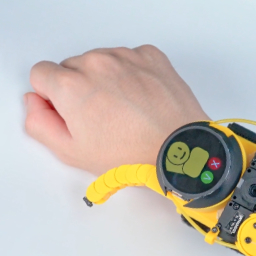
- Augmenting Smartwatch with a Rollable Tentacle, led by Ping-Jhao Hsu
- See Through With The Hands: Seamless Occluded Interactions in Augmented Reality, led by Wei-Tang Hsu
Academic service
- I serve as an Associate Chair for ACM CHI 2027, DIS 2026, UIST 2024, SIGGRAPH Asia 2025 & 2026 Emerging Technologies, Augmented Humans 2024 & 2026.
- I regularly review papers for ACM CHI, UIST, DIS, SIGGRAPH (Technical Paper), IEEE ISMAR, IEEE VR, IEEE Haptics, IEEE Robotics and Automation Letters, International Journal of Human-Computer Studies.
Teaching
- Spring, 2026 CSIE7641: Multimodal Human-Computer Interaction (graduate)
- Fall, 2025 CSIE5647: Making and Inventing Interactive Devices (undergrad)
Demos
-
-
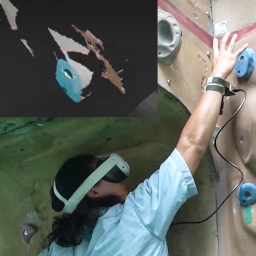 See through with the hands: seamless occluded interactions in Augmented RealityUIST 2026 Demo[ Paper (PDF) ] [ Video (YouTube) ]
Publications
-
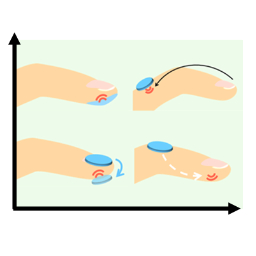 Next generation wearable haptics should balance virtual & real-world fidelityCHI 2026 Paper[ Paper (PDF) (DOI) ]
 -
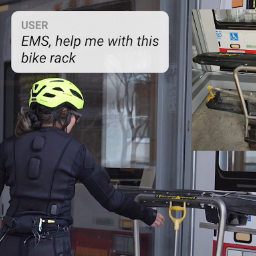 Generative muscle stimulation: providing users with physical assistance by constraining multimodal-AI with embodied knowledgeCHI 2026 Paper🏆 Best Paper Award
 -
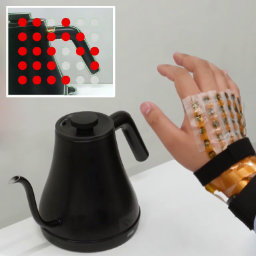 Seeing with the hands: a sensory substitution that supports manual interactionsCHI 2025 Paper
 -
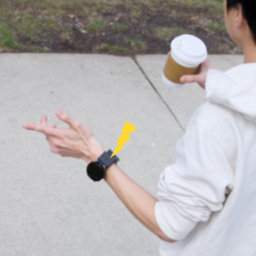 Can a smartwatch move your fingers? Compact and practical electrical muscle stimulation in a smartwatchUIST 2024 Paper🏅 Honorable Mention Award
 -
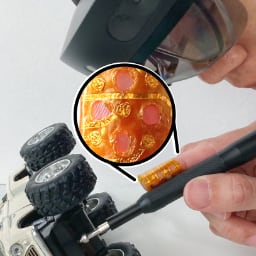 Haptic permeability: adding holes to tactile devices improves dexterityCHI 2024 Paper[ Paper (PDF) (DOI) ]
 -
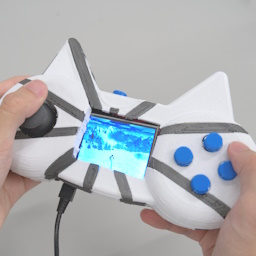 ThermalRouter: enabling users to design thermally-sound devicesUIST 2023 Paper
 -
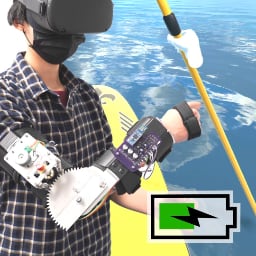 Prolonging VR haptic experiences by harvesting kinetic energy from the userUIST 2022 Paper🏅 Honorable Mention Award
 -
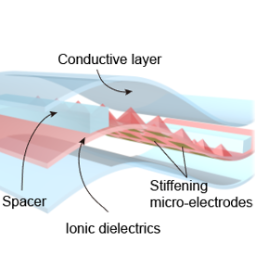 A stretchable and strain-unperturbed pressure sensor for motion-interference-free tactile monitoring on skinsScience Advances 2021[ Paper (PDF) (DOI) ]
 -
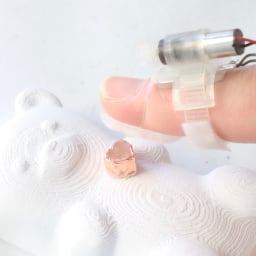 Altering perceived softness of real rigid objects by restricting fingerpad deformationUIST 2021 Paper🏆 Best Paper Award
🏆 Best Demo Award (Jury's Choice) -
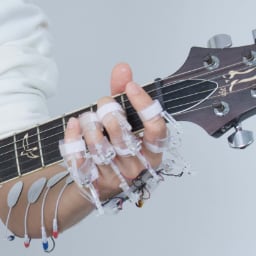 dextrEMS: increasing dexterity in electrical muscle stimulation by combining it with brakesUIST 2021 Paper🏆 Best Demo Award (People's Choice)
 -
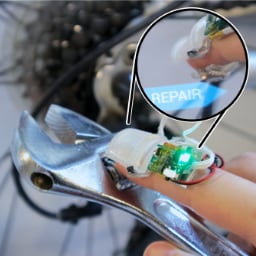 Touch&Fold: a foldable haptic actuator for rendering touch in mixed realityCHI 2021 Paper, SIGGRAPH 2021 Emerging Technologies, World Haptics 2023 Demo🏅 Honorable Mention Award
 -
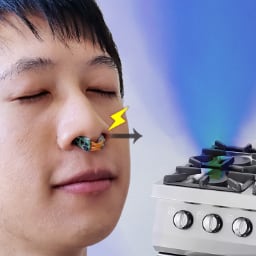 Stereo-smell via electrical trigeminal stimulationCHI 2021 Paper
 -
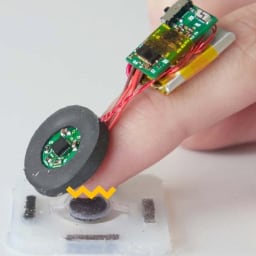 MagnetIO: passive yet interactive soft haptic patches anywhereCHI 2021 Paper
 -
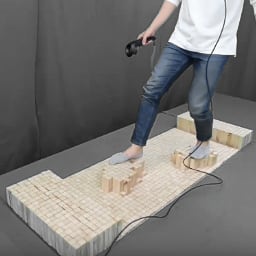
-
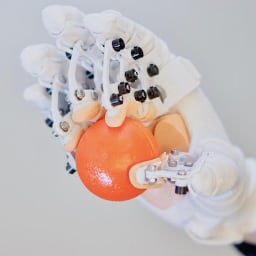 HandMorph: a passive exoskeleton that miniaturizes graspUIST 2020 Paper🏆 Best Paper Award
 -
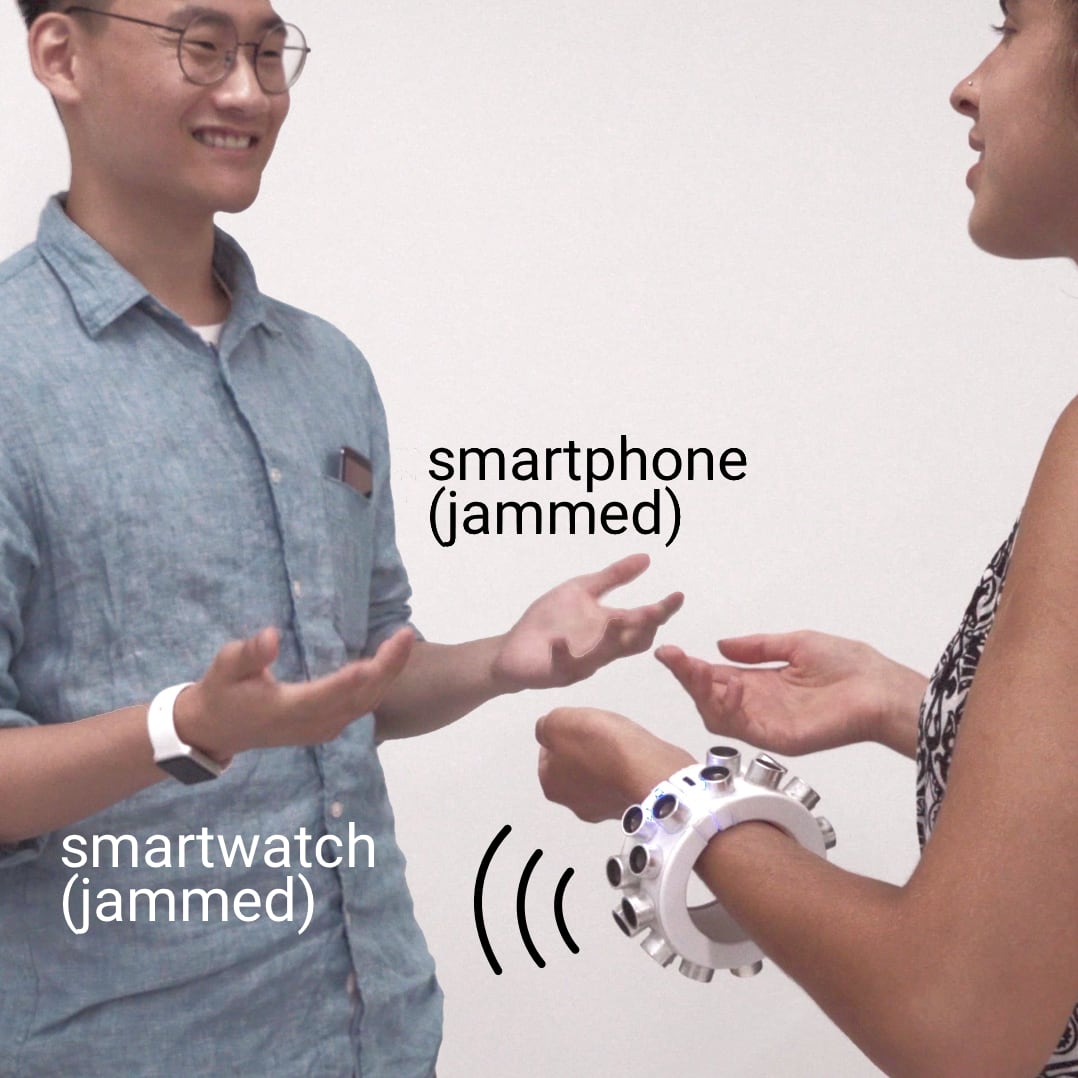 Wearable microphone jammingCHI 2020 Paper🏅 Honorable Mention Award
 -
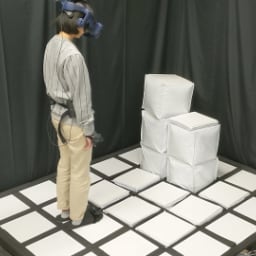 TilePoP: tile-type pop-up prop for virtual realityUIST 2019 Paper🏅 Honorable Mention Award
 -
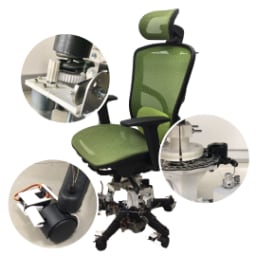 Aarnio: passive kinesthetic force output for foreground interactions on an interactive chairCHI 2019 Paper
 -
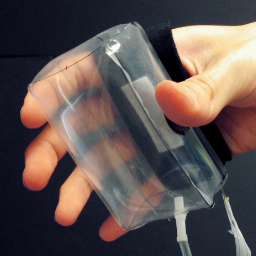 PuPoP: pop-up prop on palm for virtual realityUIST 2018 Paper
 -
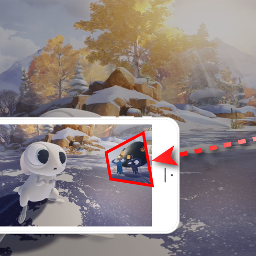 Outside-In: visualizing out-of-sight regions-of-interest in a 360 video using spatial picture-in-picture previewsUIST 2017 Paper
PhD thesis
-
 Enabling haptic experiences anywhere, anytimePhD dissertation, Computer Science, University of Chicago, 2025[ Dissertation (PDF) ] [ Defense recording ]